
Six Sigma + ESG Series: Chapter 1 ESG Begins
ESG did not emerge overnight and can be traced to the 1950s, when scholars and practitioners began to recognise that corporations exert social and environmental impacts and therefore bear broader responsibilities toward society. In the 1950s and 1960s, Corporate Social Responsibility (CSR) became an important shift in the understanding of corporate purpose and obligations. Socially Responsible Investing (SRI) then emerged in the 1960s and 1970s, laying the foundation for later developments in sustainability-oriented investment and corporate accountability.
A series of global milestones further shaped this evolution: the Brundtland Report in 1987, the Rio Earth Summit and the UNFCCC in 1992, the establishment of the Global Reporting Initiative (GRI) in 1997, and the launch of the UN Global Compact in 2000. Following the 1992 Earth Summit, businesses increasingly issued CSR reports to disclose their social and environmental impacts, reflecting a growing emphasis on transparency. The movement accelerated significantly with the launch of the UN Principles for Responsible Investment (UN PRI) in 2006, the adoption of the Paris Agreement and UN Sustainable Development Goals (SDGs) in 2015, and the creation of the Task Force on Climate-related Financial Disclosures (TCFD) in 2017.
In 2004, the specific term “ESG ” (Environmental, Social and Governance) gained prominence through the UN-supported “Who Cares Wins” report, which explicitly linked environmental, social, and governance factors to investment decision-making. Since then, ESG has moved from voluntary frameworks into formal, mandatory regulation. This is especially evident in Europe with the EU’s Sustainable Finance Disclosure Regulation (SFDR), the EU Taxonomy, and the Corporate Sustainability Reporting Directive (CSRD), alongside global convergence efforts led by the International Sustainability Standards Board (ISSB) and the release of the IFRS S1 and S2 standards.
The evolution of ESG follows a clear trajectory: from awareness to measurement, then execution, and now toward integration and proof of impact. Now ESG is no longer just a conceptual ideal, and it is something companies must operationalise, report on, audit, substantiate, and defend their performance. Many companies integrate ESG into their core business strategy, treating it as a driver of innovation and long-term value creation. In this sense, the ESG journey of companies may be read as moving from “Who Cares Wins” to “Who Can Evidence Wins” . Personally, my interpretation will be “Who Can Perform Sustains”.
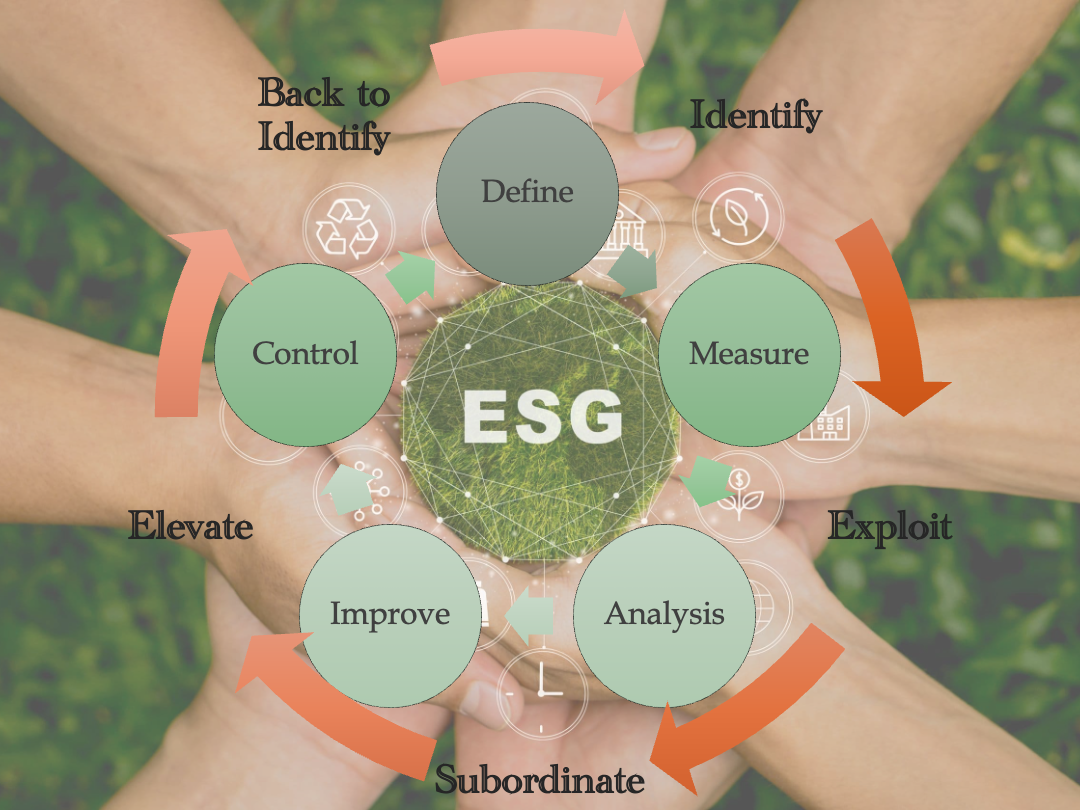
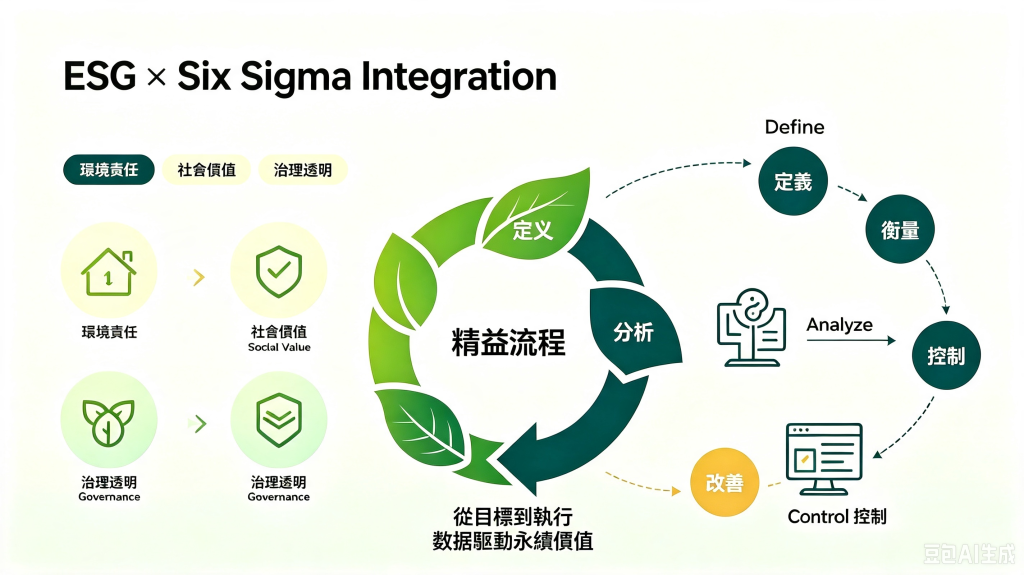
In summary, the evolution of ESG can simply be summarised into several stages: Awareness, Adoption, Execution, Verification and Integration. These stages can be much easier to implement in real-world business environments by adopting and integrating Six Sigma DMAIC methodology – Define, Measure, Analyse, Improve, Control. Subsequent chapters will elaborate on step-by-step approaches to embed DMAIC into each actionable of the ESG journey.
More discussion about the implementation and integration of ESG and Six Sigma in your workplace in practice will be published in the coming months.
To learn more about integrating ESG with operational excellence, the Six Sigma Institute offers a wide range of ESG-related seminars and courses. Please visit our website for more information.
ESG 並非一蹴而就,而是歷經長期演變而逐步形成。其根源可追溯至二十世紀五十年代,當時學者與實務界開始意識到,企業的營運行為會對社會及環境產生影響,因此企業亦應承擔更廣泛的社會責任。在二十世紀五十至六十年代,企業社會責任(Corporate Social Responsibility (CSR)概念的興起,標誌著人們對企業宗旨與義務之理解的重大轉變。其後,於二十世紀六十至七十年代社會責任投資(Socially Responsible Investing, SRI)陸續興起,為日後以可持續發展為導向的投資理念與企業問責奠定基礎。
一系列全球性里程碑進一步推動可持續發展進程,其中包括:一九八七 年的《布倫特蘭報告》(Brundtland Report)、一九九二 年的里約地球高峰會及《聯合國氣候變化框架公約》(UNFCCC)、一九九七年全球報告倡議組織(Global Reporting Initiative, GRI)的成立,以及二〇〇〇年聯合國全球契約(UN Global Compact)的推出。自一九九二年里約地球高峰會後,企業開始日益普遍地發表企業社會責任報告,以披露其社會及環境影響,反映出市場對透明度的重視持續提升。其後,聯合國責任投資原則(UN Principles for Responsible Investment, UN PRI)於二〇〇六年推出,二〇一五年《巴黎協定》與聯合國可持續發展目標(SDGs)的通過,以及二〇一七年氣候相關財務披露工作小組(Task Force on Climate-related Financial Disclosures, TCFD)的成立,均進一步加速了 ESG 的發展。
二〇〇四年,在聯合國支持下發表的《Who Cares Wins》報告中,使ESG一詞開始廣為人知,並明確將環境、社會及管治因素與投資決策連結起來。自此,ESG 從自願性框架逐步走向正式及強制性規管。尤以歐洲為甚,具體體現於歐盟的《可持續金融披露規則》(Sustainable Finance Disclosure Regulation, SFDR)、歐盟分類法(EU Taxonomy)及《企業可持續發展報告指令》(Corporate Sustainability Reporting Directive, CSRD),均標誌著 ESG 規範化的重要進程;與此同時,國際可持續準則理事會(International Sustainability Standards Board, ISSB)及 IFRS S1 與 S2 準則的發布,亦推動了全球標準趨同的發展。
ESG 的發展歷程現出清晰的軌跡:由認知、量化衡量、執行,逐步走向整合與影響驗證。時至今日ESG 不再只是一個理念層面的概念,而是企業必須予以落實、申報、審核、舉證及承擔責任的管理要求。愈來愈多企業已將 ESG 納入核心業務策略,並視之為創新與長期價值創造的重要驅動力。從這個角度看,企業的 ESG 之路,可理解為由「在乎者贏」「Who Cares Wins」走向「能證明者贏」「Who Can Evidence Wins」,在此我們將此進一步演繹為 「只有實踐,才能持久」「Who Can Perform Sustains」。
總括而言,ESG 的演進大致可歸納為數個階段:認知(Awareness)、採納(Adoption)、執行(Execution)、驗證(Verification)與整合(Integration)。在真實的商業環境中,若能導入並融合六式碼 DMAIC 方法論 — 定義(Define)、量度(Measure)、分析(Analyse)、改進(Improve)及控制(Control)— 進行整合應用,將能更有效地落實這些階段。後續章節將詳細闡述如何逐步將DMAIC嵌入ESG歷程中的各個具體執行環節。
未來幾個月,我們將在會發布更多關於如何在各自的工作場所實施和整合環境、社會及管治(ESG)和六式碼,最重要的是付諸實際行動。
如欲了解更多 ESG 與營運卓越的整合應用,六式格瑪學院提供多元 ESG 相關講座及課程,歡迎瀏覽本院網站以獲取更多資料。